Tag: success

  • Group walking

    We are walking and praying every Monday- Friday at 7pm in May!

    Last two years we have received resounding positive feedback on the walk and virtual group prayer/ chat and we are so looking forward to the year.

    You have to express interest here

    Why group walking you ask:

    Group walking offers numerous benefits, backed by research evidence:

    1. Social Support: Walking in a group fosters a sense of belonging and social support, which can improve mood and reduce stress. Research published in the Journal of Aging and Physical Activity found that group walking interventions led to significant improvements in social support and mental well-being among older adults.
    2. Accountability: Group walking provides accountability, increasing the likelihood of sticking to an exercise routine. A study published in the Annals of Behavioral Medicine found that participants in a walking group were more likely to adhere to their exercise program compared to those who exercised alone.
    3. Motivation: Group dynamics can enhance motivation levels, encouraging individuals to push themselves further. A study in the British Journal of Sports Medicine showed that group walking interventions led to greater improvements in physical activity levels and fitness compared to individual interventions.
    4. Variety and Enjoyment: Walking with others can make the activity more enjoyable and diverse, leading to increased participation. Research published in the American Journal of Health Promotion demonstrated that group walking programs resulted in higher levels of enjoyment and satisfaction compared to exercising alone.
    5. Improved Health Outcomes: Group walking has been associated with various health benefits, including improved cardiovascular health, weight management, and reduced risk of chronic diseases such as diabetes and hypertension. A systematic review published in the American Journal of Health Promotion concluded that group-based walking interventions have positive effects on physical health outcomes.

    Overall, group walking not only promotes physical activity but also enhances social connectedness and psychological well-being, making it a valuable strategy for improving overall health and quality of life.

    Joining us 1-31st May?

  • Playful Parent

    We are continuing with our Affirmations challenge. Cannot believe it’s end of November already! today we’re saying to out children ‘ You are fun to be with’.

    Can your children say the same about you?

    What does fun and playfulness look like in your home? We all have different expressions of being funny, playful and enjoying life.

    For most of us African parents, we may not have seen our parents roll on the floor with laughter, tickle or cuddle us. They had their own ways of being fun. May be they enjoyed telling folktales. May be they enjoyed singing and dancing to hyms. That was their idea of fun and there is nothing wrong with that.

    The idea of being playful especially here in diaspora can seem very alien to us parents of African heritage, as everywhere you look, there are pictures or literature on Western ways of playful parenting. I would encourage you to do what feels FUN for you. Share that side of you with your children.

    Once in a while, don’t worry about the mounting bills, all the responsibilities that come with being a parent.

    Do something that makes you have belly laughs.

    Dance to your favourite music like no-one is watching.

    Hang out with the girls or boys where needed.

    Below I share some

    Tips for being playful.

    1. Embrace Playfulness: Don’t be afraid to let loose and engage in playful activities. Whether it’s a spontaneous dance party in the living room or pretending to be pirates in the backyard, embracing your inner child creates a joyful atmosphere.
    2. Create Family Traditions: Establishing fun and memorable family traditions fosters a sense of togetherness. It could be a weekly game night, Friday movie night, Pizza party, a special breakfast on Saturdays, or an annual family outing. Consistency builds anticipation and strengthens family bonds.
    3. Be Open to Spontaneity: Sometimes, the most enjoyable moments happen unexpectedly. Be open to spontaneous adventures, like a last-minute picnic in the park or a surprise movie night, bowling evening, a drive through your neighbour or some random place. Flexibility adds an element of excitement to family life.
    4. Use Humor: A good sense of humor can diffuse tension and create a lighthearted atmosphere. Share jokes, play silly games, or simply find humor in everyday situations. Laughter is a powerful tool for bonding. Be open to silliness.
    5. Incorporate Learning into Fun: Turn educational activities into enjoyable experiences. Whether it’s a science experiment at home, a nature scavenger hunt, or a creative art project, blending learning with fun makes it engaging for both you and your children.
    6. Be Present: Quality time is key to being a fun parent. Put away distractions, focus on the moment, and actively participate in your child’s world. Whether it’s reading a book together or building a fort, being fully present enhances the enjoyment.
    7. Encourage Creativity: Provide opportunities for creative expression. This could involve arts and crafts, music sessions, or imaginative play. Allowing your children to express themselves fosters a sense of autonomy and joy. Let your children see you join clubs and activists as well. Join a salsa class, go to the gym etc
    8. Celebrate Achievements: Acknowledge and celebrate your child’s accomplishments, no matter how small. Positive reinforcement boosts their confidence and makes the learning process more enjoyable.
    9. Outdoor Adventures: Plan outdoor activities that cater to different interests. Whether it’s a nature hike, a day at the beach, or a bike ride, fresh air and physical activity contribute to a fun and healthy family dynamic.
    10. Express Affection: Show love and affection regularly. Hugs, high-fives, and words of encouragement create a positive and secure environment. Knowing they are loved unconditionally contributes to a happy and enjoyable family atmosphere.
  • Fruit of the Spirit

    At intentional parenting we run a 6am club where we share the WORD and encourage one another to walk in its TRUTH, demonstrating the love of God to those near and dear to us. One of the ways we do this is through studying the books of the Bible. This October, November and December we are in the book of Colossians.

    We are continuing reading and praying through the book of colossians. As Christian parents we are encouraged to live a life that honours God, in our conduct and actions with our children.


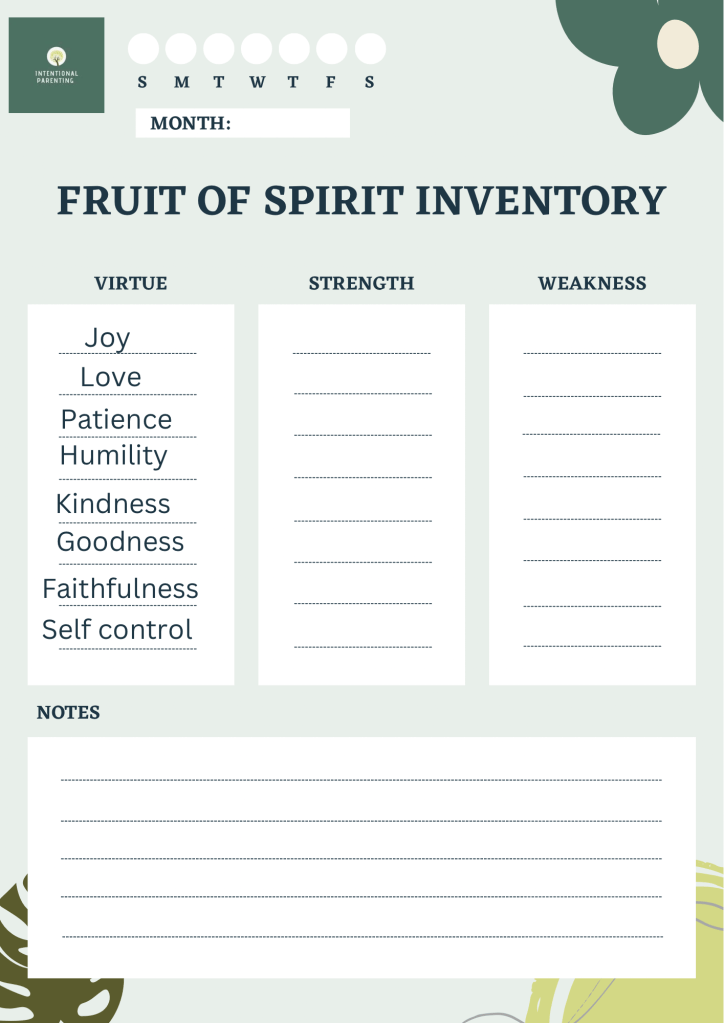
    Below is an inventory I have drafted taken from the fruits of the spirit scripture in Galatians 5:22. These fruits demonstrate to us as Christian parents that we are in union with the Spirit.

    I am inviting you to take stock/ inventory. Of these fruits which ones are you strong in? Which ones do you need to develop some stamina?

    You may find that there are seasons and moments when you are able to demonstrate these. Reflect on those seasons, what is happening? Why do you think you are able to be kind, patient and loving to your children sometimes and struggle in others? Jot these down under notes section.

    Below are tips/ways to develop and cultivate these qualities in your life:

    1. Prayer and Reflection: Regularly pray for the Holy Spirit’s guidance in developing these virtues. Reflect on your actions and attitudes in light of the fruit of the Spirit. Have someone hold you accountable to your growth.
    2. Study Scripture: Delve into the Bible to understand the teachings and examples that embody the fruit of the Spirit. Seek wisdom from scripture to apply these principles in your daily life. The Intentional Parenting monthly bible study through the 6am club will help you with this. You can join the whatsapp group via this link
    3. Embrace Love: Actively practice love by showing kindness, forgiveness, and empathy toward others especially your children. Love is foundational to the other fruits of the Spirit. Demonstrate this with your children. Let the sisterhood of faith hold you accountable in walking in love. Love compels us to look out for each other in prayer, sharing of tips/ knowledge and ideas. Join our facebook community via think facebook page
    4. Cultivate Joy: Focus on gratitude and find joy in your relationship with God. Choose to rejoice in both good and challenging circumstances, trusting in God’s plan. The gratitude jar is also a wonderful concept. Have you tried it before?
    5. Pursue Peace: Strive to be a peacemaker in your relationships with your children. Seek resolution rather than conflict and trust God’s peace to guide your decisions. Apologise to your children when you have gotten things wrong.
    6. Exercise Patience: Develop patience by understanding that God’s timing may differ from your own. Exercise restraint in difficult situations and trust God’s plan to unfold.
    7. Practice Kindness and Goodness: Actively look for opportunities to be kind and do good to others. Let your actions reflect the kindness and goodness that God has shown you. Extend this to your children. Our whatsapp and networking community offers opportunity to interact and grow with other mothers, giving you a safe space to grow.
    8. Be Faithful: Demonstrate faithfulness by staying committed to your relationship with God, your promises, and your responsibilities. Trust in God’s faithfulness as your example. I cannot over emphasise this. There is such a rise in social isolation in our generation as people develop mis-trusting relationships. As parents of faith, loving and fellowshipping with other believers is highly commended. We believe and strive to do that in our pursuit of intentionalparenting.Why don’t you join us at the next networking event. Join our Facebook page to kept up to date
    9. Cultivate Gentleness: Approach others with gentleness and humility. Avoid harsh judgment and strive to understand different perspectives.
    10. Exercise Self-Control: Practice self-discipline in your thoughts, actions, and emotions. Seek the Holy Spirit’s help to overcome temptations and cultivate self-control.

    Remember that developing the fruit of the Spirit is a lifelong process. Continually seek God’s guidance and rely on His strength to grow in these virtues, knowing that it’s through a relationship with Him that these qualities can flourish in your life.

    Remain intentional 🌱

  • Day 12 Affirmations challenge

    In todays challenge we are reminding our children that ‘You mean a lot to our family’. It’s important these words are meaningful and substantiated by actions. Would your children agree that they feel special and mean a lot? What are the things and actions that demonstrate that?

    Below are tips that you can apply to demonstrate to your child that s/he is important.

    1. Active Listening: Pay full attention when your child speaks. Show that their thoughts and feelings matter by actively engaging in conversations. Make an effort not to use the phone or screens.
    2. Quality Time: Dedicate focused, quality time to spend with your child regularly. This reinforces the importance of your relationship in their life. This could be dinner time, school run time. Normalise having connecting time with no distractions. Some parents enjoy having 1:1 dates and it does not have to be expensive.. coffee dates, etc
    3. Celebrating Achievements: Acknowledge and celebrate your child’s achievements, whether big or small. This reinforces their value and accomplishments. You can cook their favourite meal if they have been helpful in the week. Be clear what you are celebrating and refrain from celebrating academic achievement ONLY. Celebrate other virtues such as being kind, helpful, thoughtful etc.
    4. Personalized Attention: Provide individualized attention, addressing their unique needs and interests. This demonstrates that you understand and appreciate their individuality. Spend 1:1 time with your child doing the things they love.
    5. Express Affection: Regularly express affection through hugs, kisses, and verbal affirmations. Physical and verbal expressions of love emphasize their importance to you. You may not be comfortable with this if you did not grow up doing this, I would encourage you to lean onto your discomfort. You can start by hugging your child on specific times, eg when they leave home for school, when they come home, when you meet after a period of separation. You then build it up by cuddling them when on the couch together watching tv and so forth. Hugs and physical touch are good for us, they lower heart rate and blood pressure.
    6. Attend Events: Attend your child’s school events, performances, and activities. Your presence at these events communicates your active involvement and support. Negotiate with your employer so that you can attend key events and if you cannot, explain to your child in a way that they understand.
    7. Encourage Communication: Create an open and encouraging environment for your child to share their thoughts and concerns. Make it clear that their voice is heard and respected.
    8. Prioritise Safety: Ensuring your child’s safety is a tangible way of demonstrating their importance. Establishing a secure environment fosters trust and a sense of significance.
    9. Routine Check-Ins: Regularly check in with your child about their day, experiences, and feelings. It shows that you are genuinely interested in their well-being. Again the kitchen/ dining table is key for these discussions. For working parents, you can schedule a face time or video/ phone call to check on.
    10. Involve Them in Decision-Making: Include your child in age-appropriate decision-making processes. It empowers them and emphasizes that their input matters.
    11. Celebrate Special Days: Make a big deal out of their birthdays and other special occasions. Creating memorable experiences on these days reinforces their significance in your life.
    12. Create Traditions: Establish family traditions that involve your child. These can be simple routines or special activities that contribute to a sense of belonging.
    13. Display Their Artwork: Proudly showcase your child’s artwork or creations. This demonstrates that their efforts and creativity are valued. Let them know how proud you are of their creativity.
    14. Share Stories: Share stories about their childhood or family history. It fosters a sense of identity and importance in the family narrative. How about a family tree event. Talk about your own childhood. What did you enjoy the most? Who were the important people in your life . Why did you migrate?
    15. Encourage Individual Goals: Support and encourage your child in pursuing their personal goals and interests. It communicates that you believe in their potential.
    16. Celebrate Uniqueness: Embrace and celebrate the unique qualities and talents of your child. This reinforces that they are valued for who they are.
    17. Be Reliable: Be a reliable and consistent presence in your child’s life. Dependability creates a sense of security and importance.
    18. Apologize When Necessary: Acknowledge and apologize if you make a mistake. This teaches your child that their feelings and perspectives are respected.
    19. Listen Without Judgment: Create a non-judgmental space where your child feels comfortable sharing their thoughts and experiences without fear of criticism.
    20. Offer Encouragement: Provide regular words of encouragement. Positive reinforcement reinforces their self-worth and importance. The affirmations challenge is key here to support those. More details on this

    Remember, it’s the combination of these actions that truly conveys to your child that they are cherished and important in your life.

    For more information, on upcoming masterclass and vision board workshop, do join the facebook page to be kept up to date.

    For parenting support, contact Fadzai via this link

    Remain intentional 🌱

  • Intentional Parenting affirmations challenge

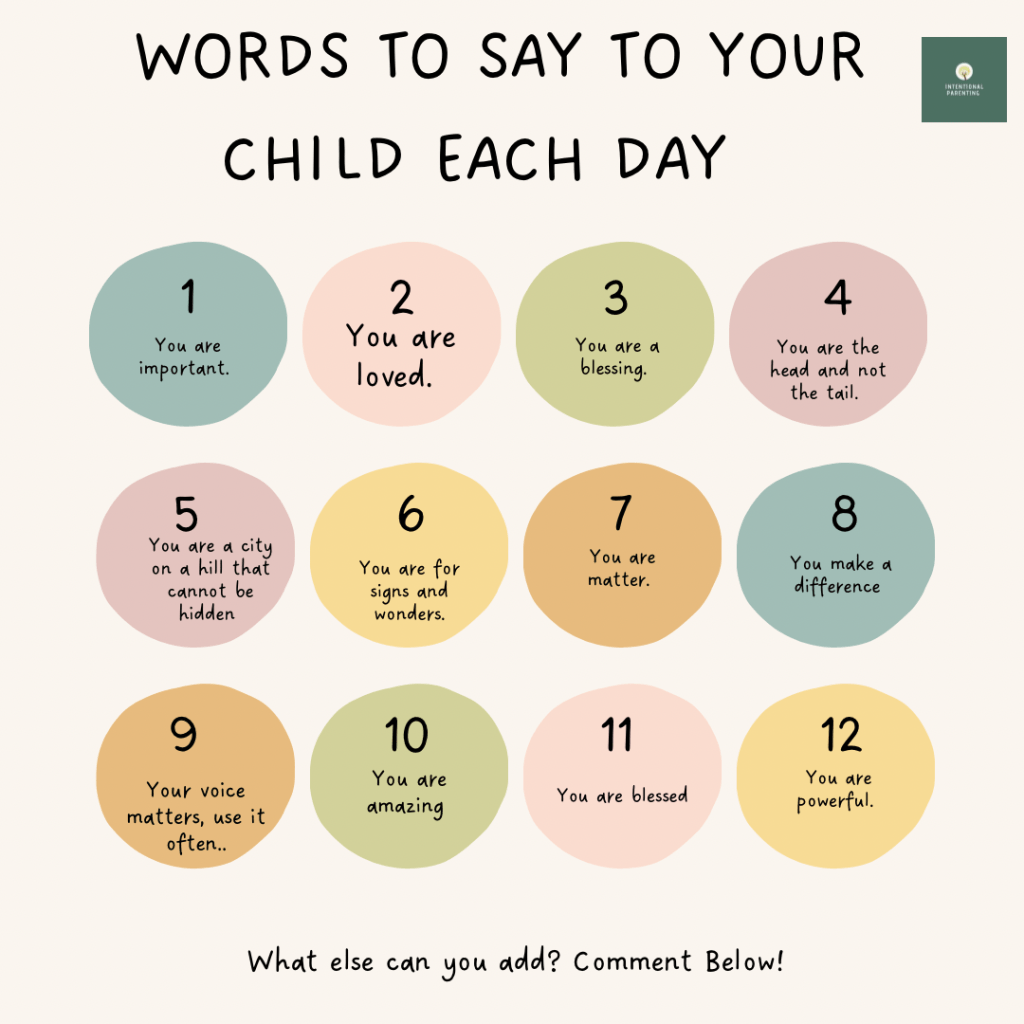
    Every month of November we are taking the positive affirmation challenge.

    Research on affirmations suggests that they can have a positive impact on the brain, influencing areas related to self-worth, self-integrity, and cognitive processing. Studies indicate that practicing affirmations may help in reducing stress, enhancing resilience, and improving overall well-being. They can also contribute to a more positive mindset, increased self-esteem, and a stronger sense of control over one’s life.

    We are encouraging parents to speak positively in the lives of your children. Most of you may already be doing this. What we are emphasising is the power of spoken words into the hearts and minds of your children.

    💡Tip

    You may also want to draw out traits that you need to see more in your child. For instance you may have a child who has either of these traits; fearful , indecisive, anxious, unkind, disorganised, confused, hanging with wrong crowds, lazy, indifferent, distracted, etc.

    Speak into those traits eg where there is laziness, speak diligence, commitment etc. Talk about it with your child in a sensitive and respectful manner:

    “I see you struggle to get things done. How can I help you?”

    Listen to their suggestions and be willing to work with them. Put practical strategies to support with what needs to happen. If you identify something that you nee help with, do get in touch with Fadzai via this link

    Talk about the challenge and how you are keen to support and make a difference as a parent.

    If your child is old enough, ask if there is anything that they need you to focus/ support or pray into?

    The idea of the challenge is to make it your own and meaningful as much as possible.

    We understand the power of the SPOKEN word especially when said in faith!

    Goal

    These are some potential goals for this challenge focused on intentional parenting:

    1. Encouraging parents to prioritize quality time and meaningful interactions with their children in order to foster strong emotional bonds and promote positive child development.
    2. Empowering parents to practice mindful, conscious parenting techniques that prioritize understanding, empathy, and effective communication, fostering a supportive and nurturing family environment.
    3. Promoting the importance of setting clear boundaries and consistent discipline strategies to help children develop self-discipline, responsibility, and healthy decision-making skills, ultimately contributing to their overall well-being and character development.
    4. Highlighting the significance of promoting emotional intelligence and resilience in children through intentional conversations, positive reinforcement, and modeling healthy emotional expression, thus equipping them with essential life skills for managing and navigating their emotions effectively.

    What you need for this challenge is to speak these AFFIRMING words into your child. If you are christian we encourage you to do it prayerfully.

    I encourage you to be creative, wild and think outside the box on how you want to do this.

    Below are examples of what you can do:

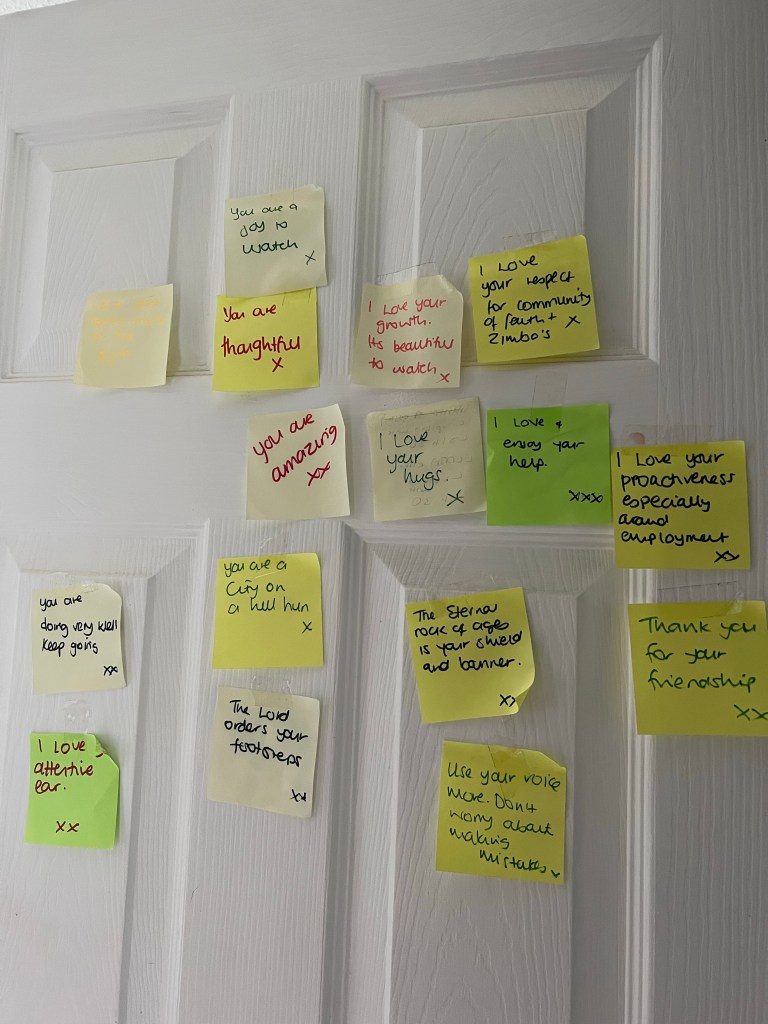
    Bedroom door.

    Affirmation JAR

    Choose a consistent time that works for you and your household. For example, a working from home parent may choose a time when the child/ ren are at school to surprise them when they come home each day with an affirmative word.

    Another parent may choose to share the word with child, pray together into that Affirmative word and may ask the child to stick it on the door.

    📌Do what works well for you and your child.

    Encourage the teens and young adults living at home to participate. Let them know you are taking the challenge. With this cohort of children, they may not be overly interested, do not lose heart. They need these WORDS more than than you can imagine. For Christian parents, you may want to pray into their rooms on your own each day using that AFFIRMATIVE word and then stick it on their bedroom door.

    For those of you with a children who share a bedroom, use different coloured post notes for each child so you can differentiate.

    If you do not have post it notes, use plain paper and coloured pen/ markers/ highlighters/ eg black pen, green, red or blue.

    Some of you may prefer to use digital notes. Use what is easier and best for you. This may work well with children who are not living at home may be in boarding schools, college, uni or left the nest altogether.

    Be as creative and wild as you want with this.

    As a parent remember to speak positively to yourself as well:

    I am a loving parent

    I am doing a great job

    I am raising the future

    I am the best parent for my child

    I am learning

    I am enough

    I am growing

    I am impactful

    I am open minded

    I am qualified to parent.

    I love what I do.

    The Challenge

    “Positive Parenting Affirmation Challenge”
    “🌟✨ Join our #IntentionalParentingAffirmationChallenge #IPAC and share your daily affirmations for a happier, more fulfilling parenting journey! Let’s uplift our children and spread the joy of positive parenting one affirmation at a time.

    🌈 Tag us and inspire others to embrace the power of positivity! Use these hashtags #ParentingPositivity #Affirmations #IntentionalParenting #IPAC

    Follow Intentional parenting socials via links below for updates and inspiration.

    Do share with your friends, families and colleagues.

    Facebook: https://www.facebook.com/intentionalparentings

    Instagram : I’m on Instagram as intentional_parenting. https://www.instagram.com/invites/contact/?i=1ja8yyio9fp65&utm_content=3bmfqzz

  • Mind the brain

    Parenting for purpose

    @bnparents

    The key to learning about brain development is to knowing and understanding that our children’s brains are not fully developed before they are 25 years🤓😬. Long time, I hear you say… it is indeed, so brace yourself for the journey!

    Hands up to those who became parents with under developed brains …. 🙋🏾‍♀️

    This isn’t to shame anyone but to create a place to reflect and think :

    So what does that mean to my parenting journey?
    How did my experience shape the relationship I have with my child/ren?

    Who else was/ is helping me in my transitioning and journey?

    How am I thriving in this space?

    What do I do with what I know now?

    In many non western cultures of the global majority, a village/ community is there to help raise a child hence some of the challenges of having children young were mitigated. The turbulent teen years were dealt with by a community so the nuclear family did not feel it that much. For those of us who grew up in Zimbabwe in the 90s and beyond we know how the christian values and beliefs shaped us even for those whose parents didn’t actively practice christianity. Gospel songs were everywhere and pretty much what we listened to especially in public places eg in commuter buses, shops and malls. So imagine the impact that had on our minds and well being!

    Fast forward to now, where families are dispersed and all over… what does that mean to be a PARENT in this fast paced world?

    How are you minding your child’s brain?

    What sort of things can you do as a parent to support positive brain development? How can you look after yourself during what is sometimes termed ‘turbulent teen years’?

    For this and more… Be sure to subscribe to this blog for the upcoming masterclass on intentionalparenting©️ starting in Autumn/November 2023.

    More details to follow…

    For now, remain intentional 🌱

  • Hey Mama

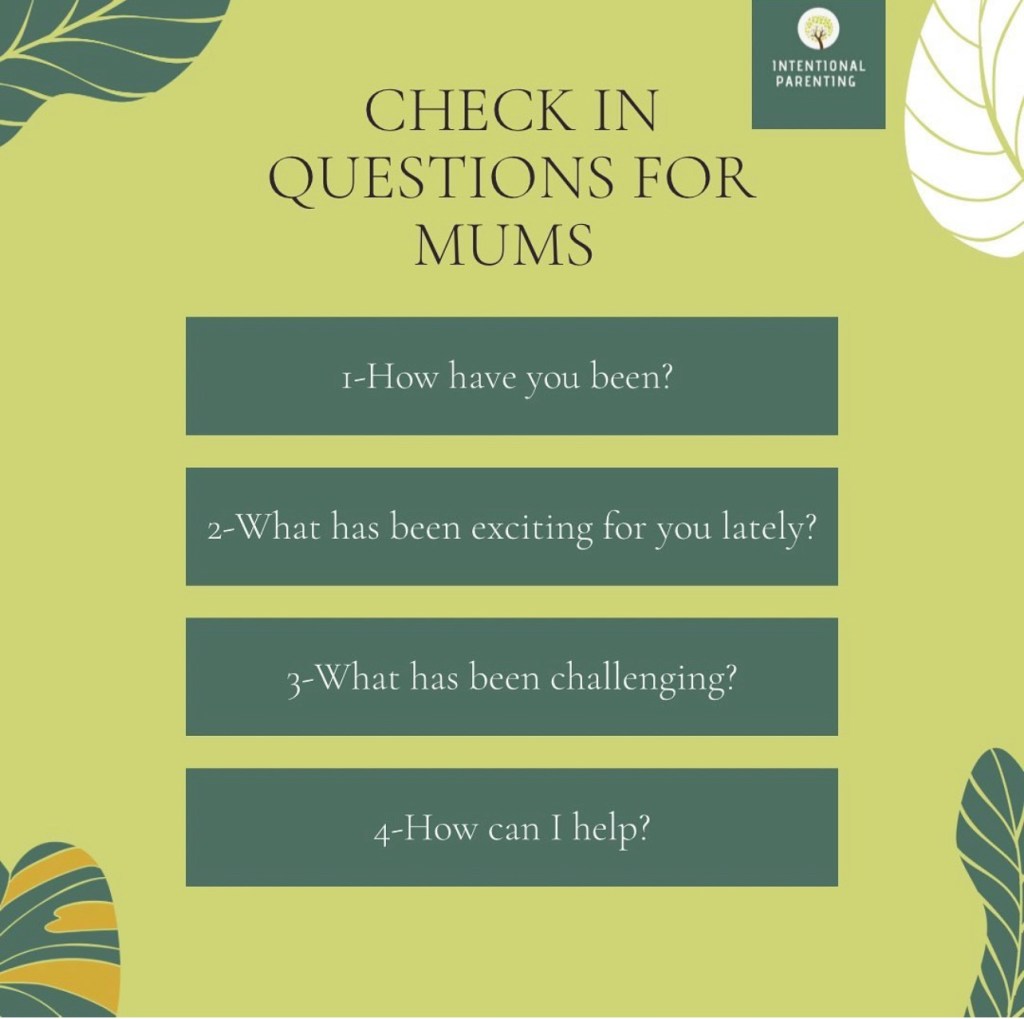
    To all mums, are you checking in with your #momfriends?

    Let’s normalise having these deep conversations. If this is your first time seeing our #intentionalcheckin, is this something you will be able to do with your community/ support network/ village?

    One of the challenges of modern day parenting is social isolation. Yes we may have so many followers/ fans, be in so many social media groups be it whatsapp/ facebook, threads, you name it.

    Yet we feel so alone!

    Developing those meaningful relationships becomes key as we seek to thrive in this parenting game. You may argue that ‘me I do not need anyone apart from my children or husband’

    What about your children? How are you teaching/ showing them the power of community and positive network?

    ‘Your children are watching and learning from you on how to live. Inspire them’

    Wilferd Peterson

    My observations and personal experiences is that you only need 2 or 3 people that you connect with at this level of doing this proper check in. People you can HONESTLY tell about the exciting and challenging things in your life.

    If you have 1 or 2 people you trust, invest in those relationships. Diarise those catch ups and honour them because life is very busy especially as parents.

    Depending with the ages of your children
    , you can use this as family check in as well. Why don’t you give it ago. Try at dinner time to check in with everyone..

    Number 4 is also very important, that questions is often underplayed yet a game changer.

    If you are not able to find practical help, in so many other ways, PRAY, Listen, signpost.

    We all can help.

    If you would like to discuss #momfriendship, need some ideas, support, signpostage,… book a confidential 1:1 consultation here

    May be you need someone to pray with you over this issue… do reach out via the consultation line on link here

    Here is to thriving and flourishing in parenting.

    Yours in the trenches with you

    Fadzai x

  • Hello July 2023

    We are here , 7th month of the year and if you are anything like me, surprised at how time is flying! We are finally in the second half of the year and we all know summer time goes quickly.

    With that said, how do you prepare for the new month? Some people like to set intentions, find a word for the month, go out for a family meal, do a family activity, others fast for a day. What’s key is to do what works for you and your family. Setting family traditions/ rituals has been found to help keep families connected and thriving.

    For most Christian families we may well remember that the beginning or end of the month normally involve corporate gathering together to pray and give thanks. Some call it an all night prayer, empowerment night, night vigil etc. This is very biblical as we read in Old Testament the importance of beginning and end of seasons. It’s time to reflect on Gods goodness and mercy. May be the first half of the year was challenging, how do you anticipate to navigate the next half? Probably it was thrilling and exciting, how do you want to continue building on that?

    Living a life of intention helps to keep you focussed and motivated on your goals as parents. It’s not so much about the big ideas but the small everyday traditions that make a huge impact. It matters how you start the day.

    One of the key things I am passionate about is the dinner table. This has been transformative for us as a family. The discussions and conversations we have had whilst eating have been powerful and would never have happened if we watched TV whilst eating.

    This is a habit that I highly recommend to all families especially with younger children. You want to set that expectation before they become teens who want to do their own thing and spend as little time with you as possible. Laying that expectation early will yield some much needed benefits later on. If you have not been doing it, it’s never too late. Be prepared to do the ground work though 😀

    For more details on setting intentions, seizing the month and our annual vision board workshop coming soon, be sure to subscribe to our email list so you are kept update of what is going.

    To find out how I can help you achieve your parenting goals, do contact me via email below or book a FREE consultation via link here

    Wishing you a blessed and impactful month.

  • Diaspora diaries: My children and their education-supporting exam time.

    Webinar

    Below are the tips we shared on supporting your children.

    God has called us into a *living* relationship with Him and those around us especially our families, children in particular.

    By investing time, we are able to be effective in supporting their journey into their growth.

    – Loving them despite and beyond the grades is key.

    – Love propels us to invest time in prayer for them.

    – Supporting them with their studies throughout the year is more important than exam day.

    – Speak to their teachers, be involved at school.

    – For most of us, the education system is a whole new experience. Seek to learn from others, ask questions, be open and willing to learn.

    – Let’s be sensitive and empathetic towards other parents who may seem to be struggling at school.

    Here are seven effective strategies:

    1. Create a Study-Friendly Environment

    Why: A quiet, organized space helps concentration and reduces distractions.

    How:

    • Dedicate a specific area for studying, free from noise and clutter.

    • Provide good lighting, comfortable seating, and necessary stationery.

    • Encourage short, focused study sessions using the Pomodoro technique (25 minutes of work, 5 minutes of break).

    2. Establish a Study Routine

    Why: A consistent routine reduces anxiety and builds productive habits.

    How:

    • Work together to create a realistic revision timetable, balancing core subjects and weaker areas.

    • Include regular breaks and time for relaxation to prevent burnout.

    • Monitor progress and adjust the plan if needed.

    3. Manage Phone and Social Media Usage

    Why: Phones and social media can be major distractions during study time.

    How:

    • Agree on “phone-free” study times and use apps like Forest or Focus Booster to block distractions.

    • Designate times for social media use, ideally during breaks or after study sessions.

    • Lead by example by minimizing your own screen time during family hours.

    4. Encourage a Balanced Lifestyle

    Why: Physical activity, sleep, and a healthy diet improve focus and reduce stress.

    How:

    • Promote regular exercise, such as walks, yoga, or sports.

    • Ensure they get 8-9 hours of sleep each night by setting consistent bedtimes.

    • Provide nutritious meals and encourage hydration, avoiding excess caffeine or sugary snacks.

    5. Offer Emotional Support

    Why: GCSEs can be stressful, and children need to feel supported and understood.

    How:

    • Listen to their concerns without judgment and offer reassurance.

    • Avoid comparing them to peers or siblings.

    • Celebrate small achievements to boost their confidence and motivation.

    6. Encourage Active Revision Techniques

    Why: Passive studying is less effective than active learning.

    How:

    • Suggest methods like mind maps, flashcards, practice exams, and teaching concepts to others.

    • Use online resources, such as GCSEPod, BBC Bitesize, or Seneca Learning, to diversify study approaches.

    • Discuss difficult topics together to help them articulate their understanding.

    7. Model a Growth Mindset

    Why: A positive attitude can reduce anxiety and encourage perseverance.

    How:

    • Emphasize effort over results: “It’s about doing your best, not being perfect.”

    • Share examples from your own life where persistence led to improvement.

    • Remind them that setbacks are learning opportunities, not failures.

    Bonus Tip: Stay Involved

    Regularly check in on their progress and well-being without micromanaging. Balance support with independence to build their confidence in managing their responsibilities.

  • Diaspora parenting

    Parenting is the most challenging and yet incredibly rewarding role that one will ever take. If you are a parent you will probably agree with me. Here i’m sharing 5tips from my upcoming book
    “Raising Fa: Surviving parenting in Diaspora”
    In this book I share on what has worked for me as a mom and I what I have learnt through my role as a public health nurse working with families in UK community as well as a safeguarding children’s nurse. Both roles have fundamental understanding of child development theories, family dynamics and the impact of environmental/societal factors on the development of a child.
    PARENTING TIPS:
    1– Partnering with God. For me this remains the best decision I made as a mom. In all circumstances, I have turned to God to help me as a mom and also help my children at whatever stage they are. By partnering with Him, it lessened the burden as when challenging times came, I looked and literally took my burden to His feet. I will share more on my next blog on how to lay at feet in prayer, interceding for our children. In that blog I will share tips such as praying for your child in their bedroom, playing worship songs continuously in their rooms etc
    2— Pray, pray, pray. Pray in faith concerning your children. Dare to believe God for the promises He says concerning your children. My favourite is “All our children shall be taught of the lord and great shall be their peace” Isaiah 54:13 O the price of peace!! That’s the greatest gift I could give my children. That they may know His peace that transcends all understanding. The bible says pray at all times and in all manner. If it bothers you, pray about it, philipians 4:6
    3—- Time is money, valuable and is precious! How true with our children! Give them the gift of your time. Let them know how much they mean to you. Drop everything and be with them. It’s the best investment one could ever make, it gives in returns. Imagine a romantic relationship with someone who can never prioritise you but gives you the leftovers all the time. It is the same with our children. Try to set aside time on a regular basis to do something fun with your children.
    Rather than tell them what not to do, teach and show them what they should do.
    4—Be equipped, learn how to be a parent. A lot of us feel we can just do it, maybe. My personal experience by not being equipped I made a lot of mistakes and now I am trying to rectify these especially with our first. Both my pregnancies were unplanned. Back home, when the community helped to raise a child, it was easier and doable. A lot of the older women were great teachers in informal education. Fast forward in the diaspora, that community is not there. Older women are around but busy and scarce.
    Parenting classes then become fundamental for a parent who wants to get it right. Local children centres offer bite size parenting courses, churches and charities as well as independent consultants offer parenting courses. Online courses are also available that are affordable and easily accessible. Society will not let you get on the road without a licence but it is ok to raise a human being on trial and error. Think about it.
    5—-In managing behaviours, use descriptive praise when they do something well. Say, “I like how you ____ when you ____.” Be specific.
    Help your child learn to express how s/he feels. Say: “You seem frustrated.” “How are you feeling?” “Are you upset?” “You look like you are angry about that.” “It’s O.K. to feel that way.”
    Try to see a situation the way your children do. Listen carefully to them.
    Above all remember to be kind to your yourself and remain hopeful. Some days are harder and some seasons are even challenging. The truth of the matter is that, it WILL come to pass. Take deep breaths, drink your water and try and get some rest. Sleep enough hours to build resilience so you can continue on the journey.
    Would love to hear how you are getting on in your parenting journey. Drop us a comment, like. Share the message of hope and let other parents know we can do it.
    Till next time,
    Remain intentional 🌱
    Love
    Fadzai x
    💕🙏🏽