August represents the peak of summer, warmth, fun and long summer days.
Here in the UK it’s right at the peak of school summer break. A time to make memories, rest and bond with children. It can also be a very stressful time to sort childcare. I pray that you have an awesome summer.
Let us pray:
Heavenly Father,
We come before You with grateful hearts, thanking You for the gift of this summer season. As we enter the month of August, we ask for Your blessings and guidance in all our activities and endeavors.
Lord, Your Word says, “The Lord bless you and keep you; the Lord make his face shine on you and be gracious to you” (Numbers 6:24-25). We pray that Your blessing and protection surround our family throughout this month. Keep us safe in our travels, adventures, and daily activities.
As we enjoy the beauty of summer, we remember Your creation and give thanks. “The earth is the Lord’s, and everything in it, the world, and all who live in it” (Psalm 24:1). Help us to appreciate the wonders of nature and spend quality time together, making lasting memories.
Lord, we seek Your wisdom in our decisions and plans. “If any of you lacks wisdom, you should ask God, who gives generously to all without finding fault, and it will be given to you” (James 1:5). Grant us discernment to make choices that honor You and bring joy to our family.
May our home be filled with love, peace, and harmony. “Above all, love each other deeply, because love covers over a multitude of sins” (1 Peter 4:8). Help us to support and encourage one another, growing closer as a family.
We pray for opportunities to rest and rejuvenate. “Come to me, all you who are weary and burdened, and I will give you rest” (Matthew 11:28). Let this summer be a time of refreshment for our bodies, minds, and spirits.
Father, we also ask for Your provision and care. “And my God will meet all your needs according to the riches of his glory in Christ Jesus” (Philippians 4:19). Meet our needs and bless us with Your abundance, so we may share with others and be a light in our community.
Thank You, Lord, for Your unending love and faithfulness. We place this month of August into Your hands, trusting in Your perfect plan for our family.
As we spend together as families, grant us the grace to make memories that last a lifetime.
Men often face various barriers to opening up about their struggles, influenced by cultural, psychological, and social factors.
What tips can we do as parents to support our sons and all the men in our lives to enjoy positive mental wellbeing?
Cultural and Social Norms: Men are often socialized to conform to traditional masculine norms, which emphasize strength, stoicism, and self-reliance. Research indicates that these norms discourage emotional expression and vulnerability. For example, Mahalik et al. (2003) found that men who strongly adhere to traditional masculine norms are less likely to seek help and express emotions, as doing so is seen as a sign of weakness . Practical TIP- In our homes we can encourage fathers to role model seeking help and support from family members. We can learn more about mental health presentations and other things that we do not know. -As parents we need to stay current and updated.
Fear of Stigmatization: There is a significant stigma attached to mental health issues and emotional vulnerability among men. Vogel et al. (2011) demonstrated that men fear being judged or labeled as weak if they disclose their struggles. This fear of stigmatization leads to a reluctance to discuss their problems or seek professional help. Practical Tip- from a young age, normalise boys struggling with their emotions or being frustrated. For example when they have a melt down, try and refrain from ‘mukomana haadaro’ translated ‘boys don’t do that’
Perceived Inadequacy of Emotional Expression: Many men believe they lack the skills to effectively communicate their emotions. Research by Levant et al. (2009) shows that men often feel inadequate in expressing their feelings, partly due to limited emotional vocabulary and the societal expectation to suppress emotions. Practical Tip.. teach all your children on the importance and place of emotion. generally in many African Christian homes, emotions such as anger, sadness, anxiety are not clearly defined but shrouded in religious terms yet we see David in the book of psalms battling these emotions time and time again. Next time you feel anxious about something.. a new job, friendship, interview etc.. vocalise that and demonstrate practical strategies that you are applying to overcome the anxiety eg breathing exercise.. going for a walk, praying, meditation etc.
Concerns About Burdening Others: Men often worry about burdening others with their problems, fearing that opening up might negatively impact their relationships or be seen as a drain on others’ emotional resources. Research by Addis and Mahalik (2003) found that men are less likely to discuss personal issues because they do not want to be perceived as a burden to their friends or family.
Lack of Supportive Environments: Many men do not have access to supportive environments where they feel safe to express their struggles. A study by Courtenay (2000) highlights that men are less likely to find supportive spaces that encourage open emotional expression, as many social settings for men emphasize competition and emotional restraint over mutual support. Practical Tip- Normalise your children see you BUILDING life giving relationships. Talk about nurturing relationships, identify them together and discuss what makes them special. Who are the two people that you count on in our own life?
These factors collectively contribute to why men might struggle to open up about their problems, impacting their mental health and well-being. We can change that narrative and it begins in our homes.
What else can you add?
Found this useful? Let me know in comment section below. If you need to discuss some of this in depth, do get in touch via this link .
Praying for your son/ son in law is a meaningful practice rooted in biblical principles and examples. Here are seven reasons why it is important:
For Wisdom and Guidance:
Example: King Solomon asked God for wisdom to lead his people, and God granted his request (1 Kings 3:9-12). Praying for your sons to receive wisdom and guidance helps them make godly decisions throughout their lives.
2-Protection:
Example: Psalm 91 is a powerful prayer for protection, where the psalmist speaks of God’s protection over those who trust in Him (Psalm 91:1-2, 9-11). Praying for your sons’ protection is essential for their physical, emotional, and spiritual safety.
3-For Strength and Courage:
Example: Joshua was encouraged by God to be strong and courageous as he led the Israelites into the Promised Land (Joshua 1:9). Praying for your sons to have strength and courage enables them to face challenges and overcome obstacles with faith.
4-For Faith and Spiritual Growth:
Example: Timothy’s faith was nurtured by his mother and grandmother, and Paul commended their influence on him (2 Timothy 1:5). Praying for your sons’ faith and spiritual growth ensures they develop a strong, personal relationship with God.
5-For Character and Integrity:
Example: Daniel maintained his integrity and faithfulness to God even in a foreign land and under pressure (Daniel 6:4-5, 10). Praying for your sons’ character and integrity helps them to be honest, trustworthy, and morally upright.
6-For God’s Favor and Success:
Example: Joseph found favor with God and man, leading to success even in difficult circumstances (Genesis 39:2-4, 21-23). Praying for God’s favor on your sons can open doors of opportunity and bless their endeavors.
7-For Their Future and Purpose:
Example: Jeremiah 29:11 speaks of God’s plans for a hopeful future. Praying for your sons’ future and purpose aligns them with God’s will and helps them fulfill their God-given destinies.
Each of these reasons highlights the importance of seeking God’s intervention and blessings in various aspects of your sons’ lives, grounding them in biblical truth and spiritual strength.
Group walking offers numerous benefits, backed by research evidence:
Social Support: Walking in a group fosters a sense of belonging and social support, which can improve mood and reduce stress. Research published in the Journal of Aging and Physical Activity found that group walking interventions led to significant improvements in social support and mental well-being among older adults.
Accountability: Group walking provides accountability, increasing the likelihood of sticking to an exercise routine. A study published in the Annals of Behavioral Medicine found that participants in a walking group were more likely to adhere to their exercise program compared to those who exercised alone.
Motivation: Group dynamics can enhance motivation levels, encouraging individuals to push themselves further. A study in the British Journal of Sports Medicine showed that group walking interventions led to greater improvements in physical activity levels and fitness compared to individual interventions.
Variety and Enjoyment: Walking with others can make the activity more enjoyable and diverse, leading to increased participation. Research published in the American Journal of Health Promotion demonstrated that group walking programs resulted in higher levels of enjoyment and satisfaction compared to exercising alone.
Improved Health Outcomes: Group walking has been associated with various health benefits, including improved cardiovascular health, weight management, and reduced risk of chronic diseases such as diabetes and hypertension. A systematic review published in the American Journal of Health Promotion concluded that group-based walking interventions have positive effects on physical health outcomes.
Overall, group walking not only promotes physical activity but also enhances social connectedness and psychological well-being, making it a valuable strategy for improving overall health and quality of life.
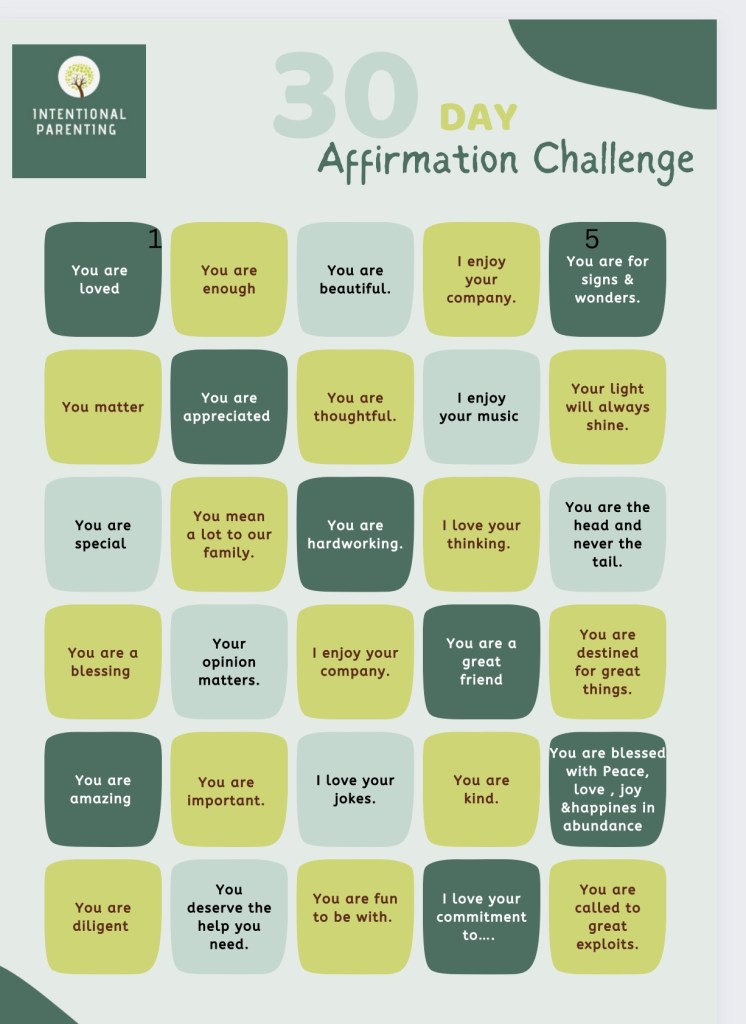
We are continuing with our Affirmations challenge. Cannot believe it’s end of November already! today we’re saying to out children ‘ You are fun to be with’.
Can your children say the same about you?
What does fun and playfulness look like in your home? We all have different expressions of being funny, playful and enjoying life.
For most of us African parents, we may not have seen our parents roll on the floor with laughter, tickle or cuddle us. They had their own ways of being fun. May be they enjoyed telling folktales. May be they enjoyed singing and dancing to hyms. That was their idea of fun and there is nothing wrong with that.
The idea of being playful especially here in diaspora can seem very alien to us parents of African heritage, as everywhere you look, there are pictures or literature on Western ways of playful parenting. I would encourage you to do what feels FUN for you. Share that side of you with your children.
Once in a while, don’t worry about the mounting bills, all the responsibilities that come with being a parent.
Do something that makes you have belly laughs.
Dance to your favourite music like no-one is watching.
Hang out with the girls or boys where needed.
Below I share some
Tips for being playful.
Embrace Playfulness: Don’t be afraid to let loose and engage in playful activities. Whether it’s a spontaneous dance party in the living room or pretending to be pirates in the backyard, embracing your inner child creates a joyful atmosphere.
Create Family Traditions: Establishing fun and memorable family traditions fosters a sense of togetherness. It could be a weekly game night, Friday movie night, Pizza party, a special breakfast on Saturdays, or an annual family outing. Consistency builds anticipation and strengthens family bonds.
Be Open to Spontaneity: Sometimes, the most enjoyable moments happen unexpectedly. Be open to spontaneous adventures, like a last-minute picnic in the park or a surprise movie night, bowling evening, a drive through your neighbour or some random place. Flexibility adds an element of excitement to family life.
Use Humor: A good sense of humor can diffuse tension and create a lighthearted atmosphere. Share jokes, play silly games, or simply find humor in everyday situations. Laughter is a powerful tool for bonding. Be open to silliness.
Incorporate Learning into Fun: Turn educational activities into enjoyable experiences. Whether it’s a science experiment at home, a nature scavenger hunt, or a creative art project, blending learning with fun makes it engaging for both you and your children.
Be Present: Quality time is key to being a fun parent. Put away distractions, focus on the moment, and actively participate in your child’s world. Whether it’s reading a book together or building a fort, being fully present enhances the enjoyment.
Encourage Creativity: Provide opportunities for creative expression. This could involve arts and crafts, music sessions, or imaginative play. Allowing your children to express themselves fosters a sense of autonomy and joy. Let your children see you join clubs and activists as well. Join a salsa class, go to the gym etc
Celebrate Achievements: Acknowledge and celebrate your child’s accomplishments, no matter how small. Positive reinforcement boosts their confidence and makes the learning process more enjoyable.
Outdoor Adventures: Plan outdoor activities that cater to different interests. Whether it’s a nature hike, a day at the beach, or a bike ride, fresh air and physical activity contribute to a fun and healthy family dynamic.
Express Affection: Show love and affection regularly. Hugs, high-fives, and words of encouragement create a positive and secure environment. Knowing they are loved unconditionally contributes to a happy and enjoyable family atmosphere.
In todays challenge we are reminding our children that ‘You mean a lot to our family’. It’s important these words are meaningful and substantiated by actions. Would your children agree that they feel special and mean a lot? What are the things and actions that demonstrate that?
Below are tips that you can apply to demonstrate to your child that s/he is important.
Active Listening: Pay full attention when your child speaks. Show that their thoughts and feelings matter by actively engaging in conversations. Make an effort not to use the phone or screens.
Quality Time: Dedicate focused, quality time to spend with your child regularly. This reinforces the importance of your relationship in their life. This could be dinner time, school run time. Normalise having connecting time with no distractions. Some parents enjoy having 1:1 dates and it does not have to be expensive.. coffee dates, etc
Celebrating Achievements: Acknowledge and celebrate your child’s achievements, whether big or small. This reinforces their value and accomplishments. You can cook their favourite meal if they have been helpful in the week. Be clear what you are celebrating and refrain from celebrating academic achievement ONLY. Celebrate other virtues such as being kind, helpful, thoughtful etc.
Personalized Attention: Provide individualized attention, addressing their unique needs and interests. This demonstrates that you understand and appreciate their individuality. Spend 1:1 time with your child doing the things they love.
Express Affection: Regularly express affection through hugs, kisses, and verbal affirmations. Physical and verbal expressions of love emphasize their importance to you. You may not be comfortable with this if you did not grow up doing this, I would encourage you to lean onto your discomfort. You can start by hugging your child on specific times, eg when they leave home for school, when they come home, when you meet after a period of separation. You then build it up by cuddling them when on the couch together watching tv and so forth. Hugs and physical touch are good for us, they lower heart rate and blood pressure.
Attend Events: Attend your child’s school events, performances, and activities. Your presence at these events communicates your active involvement and support. Negotiate with your employer so that you can attend key events and if you cannot, explain to your child in a way that they understand.
Encourage Communication: Create an open and encouraging environment for your child to share their thoughts and concerns. Make it clear that their voice is heard and respected.
Prioritise Safety: Ensuring your child’s safety is a tangible way of demonstrating their importance. Establishing a secure environment fosters trust and a sense of significance.
Routine Check-Ins: Regularly check in with your child about their day, experiences, and feelings. It shows that you are genuinely interested in their well-being. Again the kitchen/ dining table is key for these discussions. For working parents, you can schedule a face time or video/ phone call to check on.
Involve Them in Decision-Making: Include your child in age-appropriate decision-making processes. It empowers them and emphasizes that their input matters.
Celebrate Special Days: Make a big deal out of their birthdays and other special occasions. Creating memorable experiences on these days reinforces their significance in your life.
Create Traditions: Establish family traditions that involve your child. These can be simple routines or special activities that contribute to a sense of belonging.
Display Their Artwork: Proudly showcase your child’s artwork or creations. This demonstrates that their efforts and creativity are valued. Let them know how proud you are of their creativity.
Share Stories: Share stories about their childhood or family history. It fosters a sense of identity and importance in the family narrative. How about a family tree event. Talk about your own childhood. What did you enjoy the most? Who were the important people in your life . Why did you migrate?
Encourage Individual Goals: Support and encourage your child in pursuing their personal goals and interests. It communicates that you believe in their potential.
Celebrate Uniqueness: Embrace and celebrate the unique qualities and talents of your child. This reinforces that they are valued for who they are.
Be Reliable: Be a reliable and consistent presence in your child’s life. Dependability creates a sense of security and importance.
Apologize When Necessary: Acknowledge and apologize if you make a mistake. This teaches your child that their feelings and perspectives are respected.
Listen Without Judgment: Create a non-judgmental space where your child feels comfortable sharing their thoughts and experiences without fear of criticism.
Offer Encouragement: Provide regular words of encouragement. Positive reinforcement reinforces their self-worth and importance. The affirmations challenge is key here to support those. More details on this
Remember, it’s the combination of these actions that truly conveys to your child that they are cherished and important in your life.
For more information, on upcoming masterclass and vision board workshop, do join the facebook page to be kept up to date.
For parenting support, contact Fadzai via this link
Every month of November we are taking the positive affirmation challenge.
Research on affirmations suggests that they can have a positive impact on the brain, influencing areas related to self-worth, self-integrity, and cognitive processing. Studies indicate that practicing affirmations may help in reducing stress, enhancing resilience, and improving overall well-being. They can also contribute to a more positive mindset, increased self-esteem, and a stronger sense of control over one’s life.
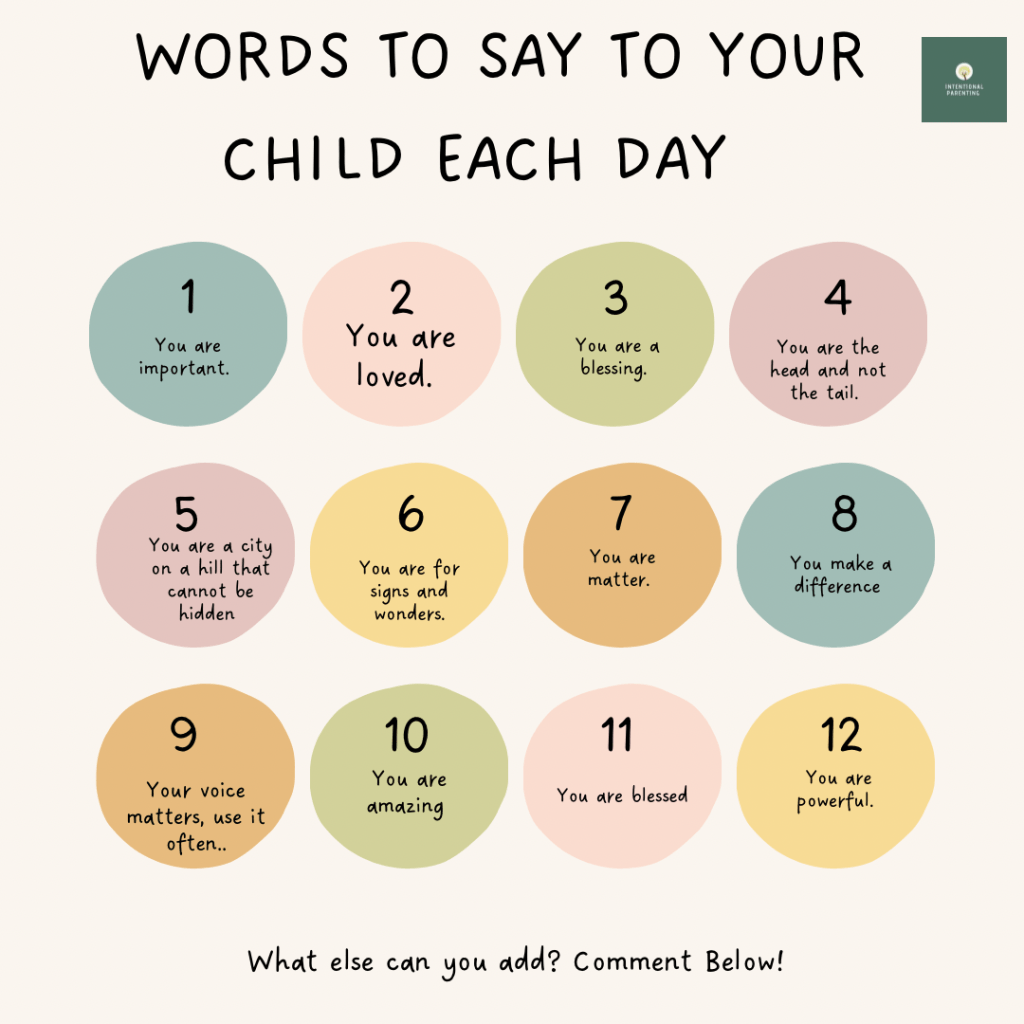
We are encouraging parents to speak positively in the lives of your children. Most of you may already be doing this. What we are emphasising is the power of spoken words into the hearts and minds of your children.
💡Tip
You may also want to draw out traits that you need to see more in your child. For instance you may have a child who has either of these traits; fearful , indecisive, anxious, unkind, disorganised, confused, hanging with wrong crowds, lazy, indifferent, distracted, etc.
Speak into those traits eg where there is laziness, speak diligence, commitment etc. Talk about it with your child in a sensitive and respectful manner:
“I see you struggle to get things done. How can I help you?”
Listen to their suggestions and be willing to work with them. Put practical strategies to support with what needs to happen. If you identify something that you nee help with, do get in touch with Fadzai via this link
Talk about the challenge and how you are keen to support and make a difference as a parent.
If your child is old enough, ask if there is anything that they need you to focus/ support or pray into?
The idea of the challenge is to make it your own and meaningful as much as possible.
We understand the power of the SPOKEN word especially when said in faith!
Goal
These are some potential goals for this challenge focused on intentional parenting:
Encouraging parents to prioritize quality time and meaningful interactions with their children in order to foster strong emotional bonds and promote positive child development.
Empowering parents to practice mindful, conscious parenting techniques that prioritize understanding, empathy, and effective communication, fostering a supportive and nurturing family environment.
Promoting the importance of setting clear boundaries and consistent discipline strategies to help children develop self-discipline, responsibility, and healthy decision-making skills, ultimately contributing to their overall well-being and character development.
Highlighting the significance of promoting emotional intelligence and resilience in children through intentional conversations, positive reinforcement, and modeling healthy emotional expression, thus equipping them with essential life skills for managing and navigating their emotions effectively.
What you need for this challenge is to speak these AFFIRMING words into your child. If you are christian we encourage you to do it prayerfully.
I encourage you to be creative, wild and think outside the box on how you want to do this.
Below are examples of what you can do:
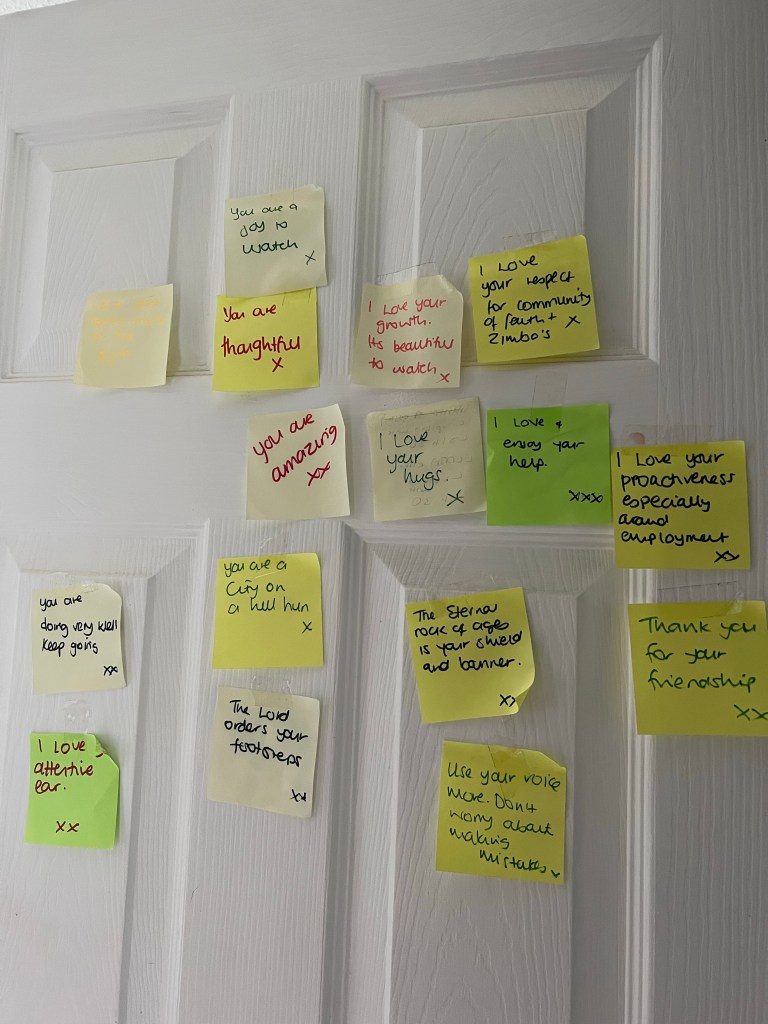
Bedroom door.
Affirmation JAR
Choose a consistent time that works for you and your household. For example, a working from home parent may choose a time when the child/ ren are at school to surprise them when they come home each day with an affirmative word.
Another parent may choose to share the word with child, pray together into that Affirmative word and may ask the child to stick it on the door.
📌Do what works well for you and your child.
Encourage the teens and young adults living at home to participate. Let them know you are taking the challenge. With this cohort of children, they may not be overly interested, do not lose heart. They need these WORDS more than than you can imagine. For Christian parents, you may want to pray into their rooms on your own each day using that AFFIRMATIVE word and then stick it on their bedroom door.
For those of you with a children who share a bedroom, use different coloured post notes for each child so you can differentiate.
If you do not have post it notes, use plain paper and coloured pen/ markers/ highlighters/ eg black pen, green, red or blue.
Some of you may prefer to use digital notes. Use what is easier and best for you. This may work well with children who are not living at home may be in boarding schools, college, uni or left the nest altogether.
Be as creative and wild as you want with this.
As a parent remember to speak positively to yourself as well:
I am a loving parent
I am doing a great job
I am raising the future
I am the best parent for my child
I am learning
I am enough
I am growing
I am impactful
I am open minded
I am qualified to parent.
I love what I do.
The Challenge
“Positive Parenting Affirmation Challenge” “🌟✨ Join our #IntentionalParentingAffirmationChallenge #IPAC and share your daily affirmations for a happier, more fulfilling parenting journey! Let’s uplift our children and spread the joy of positive parenting one affirmation at a time.
🌈 Tag us and inspire others to embrace the power of positivity! Use these hashtags #ParentingPositivity #Affirmations #IntentionalParenting #IPAC
Follow Intentional parenting socials via links below for updates and inspiration.
Do share with your friends, families and colleagues.
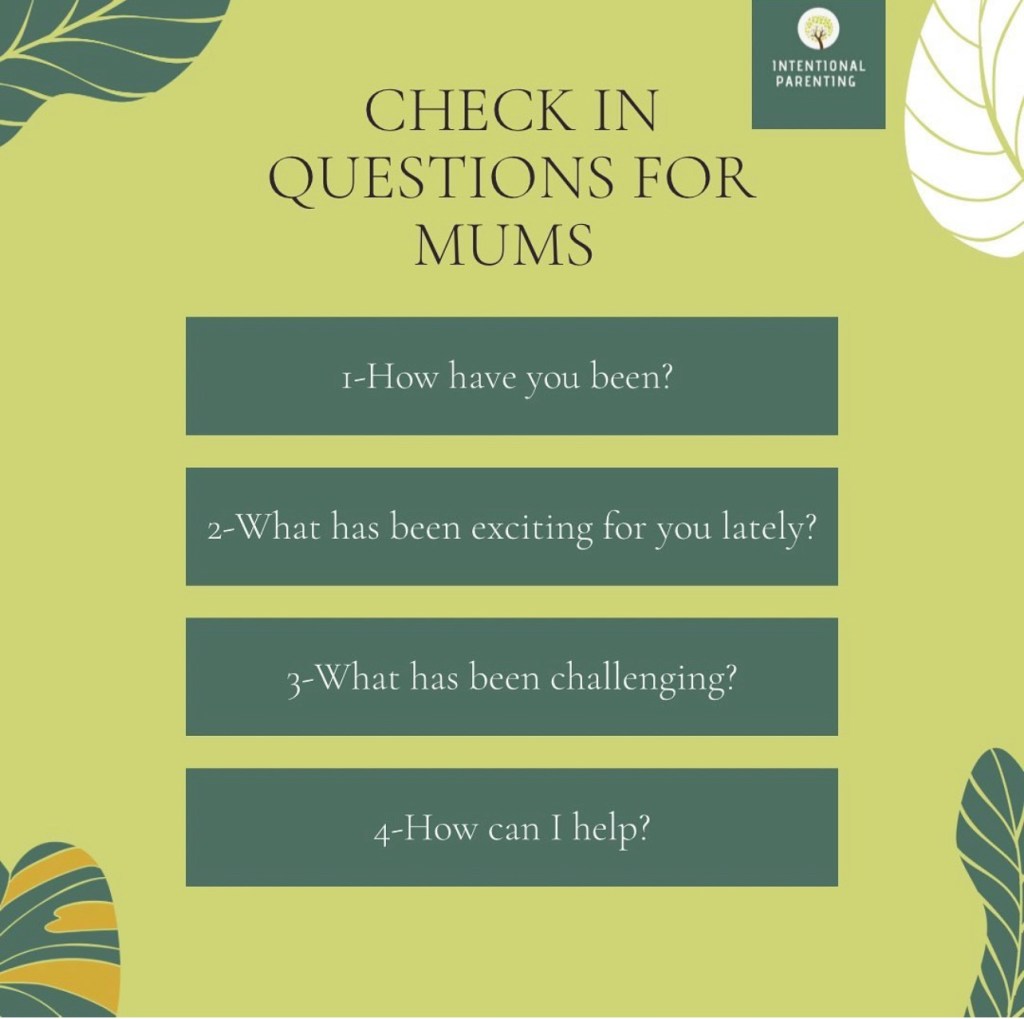
To all mums, are you checking in with your #momfriends?
Let’s normalise having these deep conversations. If this is your first time seeing our #intentionalcheckin, is this something you will be able to do with your community/ support network/ village?
One of the challenges of modern day parenting is social isolation. Yes we may have so many followers/ fans, be in so many social media groups be it whatsapp/ facebook, threads, you name it.
Yet we feel so alone!
Developing those meaningful relationships becomes key as we seek to thrive in this parenting game. You may argue that ‘me I do not need anyone apart from my children or husband’
What about your children? How are you teaching/ showing them the power of community and positive network?
‘Your children are watching and learning from you on how to live. Inspire them’
Wilferd Peterson
My observations and personal experiences is that you only need 2 or 3 people that you connect with at this level of doing this proper check in. People you can HONESTLY tell about the exciting and challenging things in your life.
If you have 1 or 2 people you trust, invest in those relationships. Diarise those catch ups and honour them because life is very busy especially as parents.
Depending with the ages of your children , you can use this as family check in as well. Why don’t you give it ago. Try at dinner time to check in with everyone..
Number 4 is also very important, that questions is often underplayed yet a game changer.
If you are not able to find practical help, in so many other ways, PRAY, Listen, signpost.
We all can help.
If you would like to discuss #momfriendship, need some ideas, support, signpostage,… book a confidential 1:1 consultation here
May be you need someone to pray with you over this issue… do reach out via the consultation line on link here
Intentional parenting stands with Child Q. As a community of black African parents, we will work with our community at large to heal on the trauma that we have faced.
What makes Child Q a very distressing and complex case is the layers of abuse, discrimination, injustice the community faces. To rectify these issues requires a system wise approach. For instance, why didn’t Child Q refuse to be undressed without her parents there??
As I write it’s difficult to imagine what must have been going through her mind when all this was happening. I want to take a minute and applaud the relationship Child Q has with her mother that she was able to share the horrors of what happened to her.
Thank you to the Hackney Safeguarding who took this forward to the panel.
We are holding a series of webinars to discuss about this trauma, led by qualified practitioners from education, health, safeguarding, parenting,faith, youth work and many others.
Intentional Parenting invites those with expertise in those areas, are willing to work with our community to get in touch via our contact page below via email/ phone/ whatsapp.
We are open and willing to work with both statutory and voluntary organisations in forging a way forward.
We understand that this is not an isolated incident. We will speak to our children and LISTEN to their experiences. We will LEARN from their experiences and stand with them.
We promise to make time and read the SCHOOL policies so we are familiar with them.
As a community we will seek opportunities to be part of the change both in schools and our local areas. These will include volunteering and participating in events that involve our children’s education such as school governorship, PTA (parent teacher association), youth work etc.
We pledge to continue working within our community and other partner agencies in making sure ALL children thrive and reach their potential.
To Child Q and many others, we see you. we hear you. As your parents forgive us for times we didn’t believe you, we are willing to do the work.
Hey Fa, you have always wanted to be a mum, haven’t you? Stories are told from school friends that you fantasised so much about this role. Yes, I do remember dating my now husband and telling him the names of our 4children. It still remains a running joke in our house. Two have been enough and I am so grateful for their impact and contribution to who I am today 😍
Today as the world celebrates mother’s day I would like to draw your attention to maternal mental health as well. For many of us, our children are indeed bundles of joy. Our pride and joy. Yet, sometimes that experience can be tricky. I am partnering with the Perinatal Mental Health Partnership to share my story here.
What do you do when motherhood sends you spiralling into dark tunnels and difficult roads? We do not openly talk about these experiences enough for a number of reasons. Personally, I think like all things parenting/ motherhood, it’s difficult to make sense of what’s happening when things are taking place. By the time you are finally able to make sense of the drama, it’s time to move on and cover the lost ground. And sometimes, that experience isn’t yours alone to own so it becomes difficult to share other people’s experiences. How can you talk about motherhood/ parenting and leave your child/ ren/ spouse/ partner/ husband out of the equation? Many a times, african parenting experiences will also include wider extended family members because we roll like that, right? What about the shame that comes with struggling in parenting?
Our eldest and only son was born back home in Zimbabwe. Boy, was dearly loved and adored since his quick conception apart from the severe vommitting which lasted forever and I now understand to be hyperemesis gravidarum. You can read more about it here.
During this pregnancy, I was working out of town, commuting every Friday and Monday from the marital home. I hadn’t envisioned how this would take a toil on my mental and emotional well being. On taking maternity leave I went to be with my parents as per our Shona custom of kusungirwa. You can read more about this fascinating practice here
I stayed with my parents from 35weeks of my pregnancy till I gave birth. It was wonderful to be back in the family home and with the community that had known me from birth. I had an uneventful labor, although the midwife was rude (story of another day). My mum took her grandma role seriously with such diligence it was fascinating. I was taken care of, not permitted to do much apart from bathing and breastfeeding. It was bliss. I resigned from my job with the hope of finding something local.
For 6 weeks postpartum, I was ‘fattened’, waited upon and pampered as a new mom by my mum and maternal grandmother. After-all, this was their eldest great grandson. My maternal great grandmother would soon visit and all the 5 generations would gush and give thanks for Gods blessings. That did not stop our son from having colic and being the most unsettled baby in the household. My mom and grandmother used to take turns to cuddle and bhabhu him to sleep which he loved. I remember very well my late grandma laying down to sleep on her tummy with boy was on her back.
Once I returned to the marital home, I couldn’t bath, eat or do anything due to his crying. Because I was waited on for 6weeks, I wasn’t prepared for juggling motherhood and house chores. Social isolation did not help either as we moved into suburbia. My poor husband did not know how best he could help. Things kinda settled when we finally got a nanny, when son was around 3months old. On reflection, I feel I should not have suffered in silence. But how could I? I did not know or understand what was going on. Gripe water did not work and son blatantly refused formula milk.
The feeling of overwhelm and sadness was insidious. I felt lost in all the roles life required of me. This was meant to be exciting, fun and fulfilling yet here I was! Hubby tried. We started going for evening jogs together. Then, it was to shift the postpartum baby weight and sure it did. As the months progressed, we would have lunch dates 3times a week near his workplace. This was to give me something to do, create an opportunity to have a proper shower, dress up and show up at his workplace 😍. I just felt so lost. Family and friends empathised with my struggles. My parents would often comment that I missed work and all the freedom it brought ‘Wanga wajaira mari yako’ translating ‘you miss having your own money and financial independence’. That was very true. I applied everywhere for work and jobs were hard to come by.
A dear friend would invite me for play dates, coffee etc. It worked for a bit. She would have our son and the nanny on valentines just so me and hubby could have couple’s time. It was only a few years later when we met here in UK with this dear friend and we were talking about how much I struggled. It was then and when I was training as a public health nurse that it became clearer that I had suffered from postnatal depression(PND). The good news is though I struggled, I recovered. As the months progressed, it got easier and life became lighter.
There are many reasons why one may suffer postnatal depression. The Very well offer more insight on PND here very well
I am writing this to encourage other moms out there. Motherhood is challenging but there is help and resources available. Do not suffer in silence, there is help available. One of the sad things about untreated/ undiagnosed PND is the moments and time lost to love and enjoy your baby. PND can also place a strain on other relationships especially your marriage as your partner struggles to understand or is needed to step up and support you and the baby.
Friends have since commented that they didn’t know how to help. Family couldn’t understand how and why I would struggle. We ticked all the boxes for a blessed life, yet here I was. I would have loved for people to ask me, ‘are you ok?’
If someone you know is struggling, please ask. At most let them know you are available and willing to be contacted if they need anything. In this age of busyness, many people struggle on their own as they do not want to bother other people. It should not be. Look out for your family and friends. Be a sister’s keeper. Check in on loved ones. A phone call or text doesn’t cost much.
So what can one do if you feel you are struggling as a mum?
📌Talking about your feelings: Talking your feelings through with someone is a start. For most couples talking to your spouse/ partner ideally, should be the first point of call. By talking it through together, it aids the transitioning journey to be in synergy. Sometimes, he may not be the best candidate to talk to, maybe due to work pressures or lack of insight. My husband did the practical bits ( coming home on time to cook and relieve me so I could have a shower). However, he never confronted my emotions and how overwhelmed I felt and looked. He just did not know how to and so were my family and friends. Here in UK, Your GP is a point of call and s/he can signpost you to the necessary services. Midwife and health visitors are also best placed to support you.
📌Treatment: there are a variety of treatment options available. You can explore this with your GP/ health provider.
📌Community/ cultural groups. These groups, if well run, are fantastic for offering a sense of belonging and well being. The challenge from a professional point of view, is that they can be a stumbling block to cultural integration. Some of the groups do not offer parenting courses, support groups etc. The Intentional Parenting Community exists to support African migrant families who sometimes want to talk to someone who understands ‘where you are coming from’. Indeed parenting practices differ globally. Our 6am club is a faith/ prayer club for mums who want a safe place to build relationships, pray and center their day. The club runs term time only, Monday -friday 6am-6:30am GMT via zoom. Anyone is free to join. You can connect via this link. Our webinars are also a great resource to learn, ask questions and be equipped as a parent. More details coming soon for the webinar sessions.
✨Motherhood groups/ networks are key for supporting the journey. Our upcoming luncheon is one such example of mothers coming together to share, laugh, learn, network and support each other. More details here
Would love to hear if any of this resonated with you. Please do share widely with your networks.







 Intentional parenting